
Most first-time parents in Kenya buy whatever nappies they can find at the nearest pharmacy, then spend the next three months quietly wondering if they’ve chosen correctly. There’s nothing wrong with that approach. But once you understand what separates one nappy from another, the decision gets a lot easier — and the nights get a lot quieter.
Baby nappies in Kenya come in a few main formats. Knowing what each one does, and when to use it, is the difference between a calm routine and a constant battle.
Tape Nappies Versus Pants — Which One Is for Your Baby?
The most important distinction isn’t brand. It’s format.
Tape nappies — sometimes called tab or open nappies — fasten on the sides with adjustable sticky tabs. They’re designed for babies who lie flat for changes. Newborns, young babies, and those who haven’t yet started moving much are usually the right fit for tape nappies. The tabs let you adjust the waist precisely, which is useful when babies are still in the early weight ranges where a small difference in fit matters a lot.
Pants-style nappies pull on and off like underwear. Once your baby is crawling or pulling up on furniture, these are considerably faster to use. You can do a standing change in a flat in Westlands or a petrol station in Nakuru without needing a changing surface. The trade-off is that the waist isn’t adjustable — you’re relying on the elasticated band to fit well.
For most Kenyan families, the switch from tape to pants happens somewhere between 5 and 8 months. Some parents keep tape nappies for night and use pants during the day. Both approaches are fine.
Getting the Size Right for Your Baby
Baby nappies in Kenya are sized by weight. The age ranges on packaging are estimates — a big baby at 3 months might need the same size as an average baby at 5 months. Go by what your baby currently weighs.
NipNap sizing works like this:
- Size 1 / Newborn: up to 5 kg
- Size 2 / Small: 3–6 kg
- Size 3 / Midi: 5–9 kg
- Size 4 / Maxi: 8–14 kg
- Size 5 / Junior: 12–22 kg
The most common sizing mistake is staying in a size too long. If the nappy is consistently leaking despite being properly fastened, and the core isn’t overloaded, it’s usually a sign the size is too small. Red marks on the thighs or waist confirm it — move up.
The opposite problem — nappies that sag or gap at the legs — usually means the current size is too large. Leaks at the legs often come from a fit gap, not a quality problem.
What Makes a Good Nappy in Kenya?
Beyond size and format, there are a few things worth looking for.
The inner surface — the layer that sits against your baby’s skin — should feel soft and stay dry. A wet-feeling inner layer means moisture is sitting on the skin rather than being pulled into the core. That’s how rashes start.
The absorbent core should hold its structure when full. Cheap nappies often use fluff pulp that clumps and shifts when wet, leaving gaps in coverage. Quality baby nappies in Kenya use SAP (super absorbent polymer) to lock moisture in and keep the core evenly distributed.
Leg cuffs — small raised barriers at the inner thigh — are not optional. They’re what stop runny bowel movements from leaking sideways. Any nappy without decent leg cuffs will let you down at the worst possible moment.
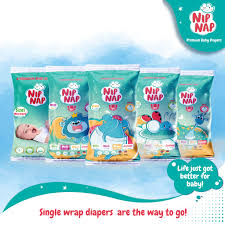
NipNap’s full product range covers all of these bases and is sized for Kenyan babies. Visit our product page at nipnap.co.ke to see what’s available in your baby’s weight range.
How Often Should You Change Baby Nappies?
Every 2 to 4 hours during the day, and immediately after any bowel movement. A full nappy that’s left too long — even a high-quality one — will cause irritation. The nappy rash most parents attribute to product quality is often a change-frequency issue.
At night, a quality nappy with a strong absorbent core should last the full sleep without needing a change, unless there’s a bowel movement. If your baby is waking up damp and uncomfortable, the nappy is either the wrong size, the wrong brand, or being changed too infrequently during the day.
For advice on nappy types and what works for your baby’s specific age and stage, contact NipNap here. You can also read what other Kenyan parents think of our products on Google.
FAQ
Q: What’s the difference between nappies and diapers in Kenya?
None. The terms are used interchangeably. Nappy is the British English term; diaper is American. In Kenya, you’ll hear both — they refer to the same product.
Q: How do I know if my baby is in the wrong nappy size?
Leaks despite a full nappy (too small), red marks on the skin (too small), or sagging and gapping at the legs (too large). Use weight to pick the correct size, not the age printed on the pack.
Q: Are cloth nappies or disposable better for Kenyan babies?
Disposable baby nappies in Kenya are more practical for most families given water availability, drying time, and hygiene considerations — especially in flats and urban settings. Cloth nappies work well for families with reliable washing and drying facilities.
Q: How many nappies will I need in the first month?
Expect 8 to 12 changes per day for a newborn. That’s roughly 250 to 360 nappies in the first month. Buying in bulk packs reduces cost significantly.