
The weight-based sizing chart Kenyan parents actually need, Newborn through Size 7, plus how to spot a nappy that's too small or too big before it leaks.
You bought "newborn" nappies because your baby is, well, a newborn. Three weeks later they're leaking through every one of them. Sound familiar?
Here's the thing nobody prints on the front of the pack in big letters: baby nappies in Kenya are sized by weight, not by how many weeks old your baby is. A big nine-week-old and a small nine-week-old need completely different sizes, and using age as your guide is the single most common reason parents end up dealing with leaks, red marks, or a nappy that sags by lunchtime.
This is the chart we wish every hospital handed new parents on the way out the door.
The Weight-Based Nappy Sizing Chart
| Size | Weight Range | Typical Age (rough guide only) |
|---|---|---|
| Size 1 – Newborn | Up to 5 kg | Birth to ~6 weeks |
| Size 2 – Mini | 3–6 kg | ~1–3 months |
| Size 3 – Midi | 5–9 kg | ~3–8 months |
| Size 4 – Maxi | 8–14 kg | ~7–18 months |
| Size 5 – Junior | 12–22 kg | ~16 months–3 years |
| Size 6 | 16–25 kg | ~2.5–4 years |
| Size 7 | Above 25 kg | 4 years+ |
Ranges shown are for NipNap disposable nappies and pants. Notice the overlap between sizes: that's intentional, because two babies of the same age can differ by two or three kilos.
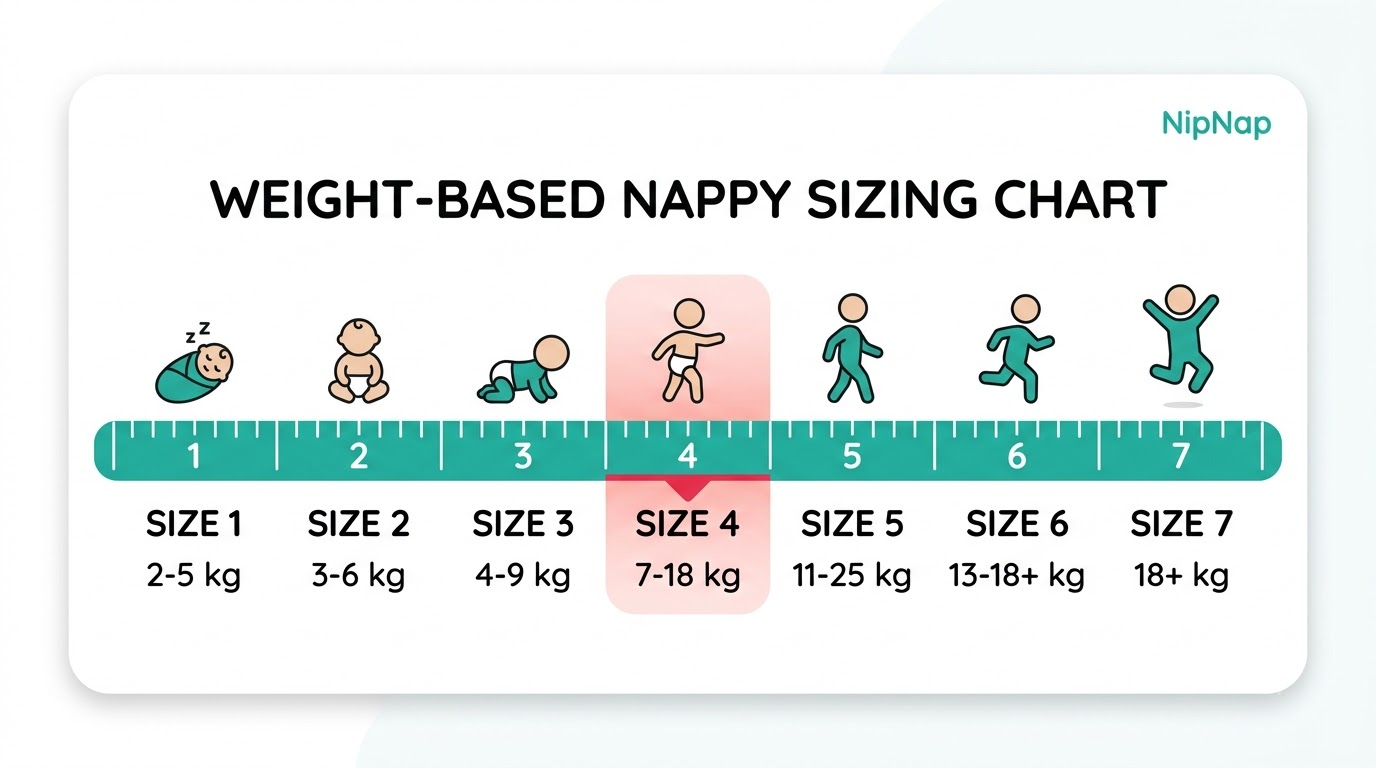
The "typical age" column is only there so you have a rough mental picture. Ignore it the moment your baby's weight tells you something different. Weight is the only number that matters when you're standing in the aisle deciding between two packs.
Why Age-Based Guessing Fails
Packaging often prints an age range because it's an easy shorthand for shoppers, but babies simply don't grow on a printed schedule. According to the WHO Child Growth Standards, healthy babies of the exact same age can sit anywhere between the 3rd and 97th percentile for weight, a spread of several kilos at almost every stage of the first year. That's a wide enough gap to push one baby into Size 3 while another is still comfortably in Size 2, even though their birth certificates say the same thing.
So when you're picking a size, weigh your baby (a clinic visit or a simple bathroom-scale trick works), check that number against the chart above, and buy accordingly. Recheck every few weeks. Babies gain fastest in the first months, then slow down, which is exactly why the "right" size keeps changing under you.
Signs the Fit Is Wrong
Too Small
- Red marks or indentation lines around the tummy or thighs after you take it off
- Frequent leaks at the leg cuffs, even on schedule
- Tabs barely reach, or you have to stretch them to fasten
- Visible gaps where the core doesn't reach the whole seat
Too Big
- Sagging at the back, even right after a change
- Gapping around the legs that lets moisture escape sideways
- Waistband sits low, or tabs overlap by a lot
- Leaks from the front, especially overnight
If you're seeing two or more small-size signs, size up. A snug nappy is good; a tight one just causes discomfort and pushes leaks sideways instead of stopping them. Too-big nappies fail for the opposite reason: there's no seal, so the core can't do its job.
Disposable Nappies vs. Baby Pants: Which Suits Which Stage
Sizing gets a bit more specific once you factor in shape as well as weight. NipNap sells both taped disposable nappies and pull-on baby pants, and the right pick often comes down to what your baby is doing at that size, not just their weight.
| Feature | Disposable Nappies | Baby Pants |
|---|---|---|
| Fastening | Adhesive side tabs | Pull up and down like underwear |
| Best for | Newborns and babies who aren't moving much yet | Crawlers, walkers, and squirmy changes |
| Changing on the go | Needs a flat surface to fasten properly | Quick standing changes, no lay-down needed |
| Fit as baby grows | Tabs adjust slightly for a snugger fit | Stretchy waistband moves with growth spurts |
Many parents use disposables for the newborn stage, then switch to pants once their baby starts rolling, crawling, or standing for changes.
How Often Should You Reassess Sizing?
More often than feels necessary, honestly. In the first six months, most babies are gaining weight quickly enough that a size which fit perfectly in week two can feel tight by week six. As a rough habit:
- 0–6 months: Check every 3–4 weeks, or sooner if you notice leaks or marks
- 6–12 months: Check monthly
- 12 months+: Growth slows, so every 6–8 weeks is usually enough
Keep an eye on the weight printed on the pack rather than assuming "we just bought this size, it must still be right." Nappy budgets get tight fast in Kenya, and buying one size too small to finish the pack almost always costs more in the long run through leaks, extra laundry, and rash cream.
A Quick Checklist You Can Screenshot
- Weigh your baby (or check their last clinic weight)
- Match that number to the chart above, not their age
- Check for red marks or gapping at the next change
- If two sizes seem possible, size up for overnight and size down (if snug) for daytime
- Reassess every 3–4 weeks under 6 months, monthly after that
Save this or take a screenshot, it's genuinely faster than re-Googling it at 2am.
Where NipNap Fits In
NipNap baby nappies in Kenya run the full range in this chart, from Size 1 Newborn right through to Size 7, each with a printed weight range on the pack so you're never guessing. Every size uses the same 3D absorbent core and stretch waistband, which means the fit stays consistent as your baby moves up through sizes, you're not relearning a new nappy every time they grow. For a closer look at what's in each size, NipNap's full size guide breaks down the features pack by pack.
If you're still working out where nappy sizing fits into the bigger picture of choosing nappies in Kenya, our full library of nappy guides covers types, materials, and what actually makes a difference for comfort.
Get the Right Size, First Try
Shop baby nappies Kenya parents trust in every size, delivered or ready at your nearest stockist.
FAQ: Baby Nappies Kenya Sizing
My baby is between two sizes on the chart. Which do I choose?
Size up. A slightly loose nappy with a proper seal at the legs beats a snug one that leaves marks. This matters even more overnight, when the nappy is holding more for longer.
Do all baby nappies in Kenya use the same weight ranges?
No, ranges vary slightly by brand, so always check the specific pack rather than assuming every "Size 3" means the same thing. NipNap prints the weight range clearly on every pack for this reason.
My baby is tall and thin. Should I size by weight or by how they look?
Weight. A baby who looks long and lean can still be well within a lower size's weight range, and sizing by "how big they look" is a common way parents end up buying nappies that don't fit properly at the waist.
How do I know if it's a sizing problem or a different issue, like rash?
If the leaks happen at the same spot every time (usually the legs or the back), it's almost always sizing. If your baby also has redness that doesn't clear between changes, that's worth checking with your baby's clinic separately from the nappy size itself.
Where can I buy NipNap nappies in the right size?
NipNap is stocked at Mydawa, Carrefour, and Greenspoon, or you can message the team directly on WhatsApp to confirm sizing and get your pack delivered.