

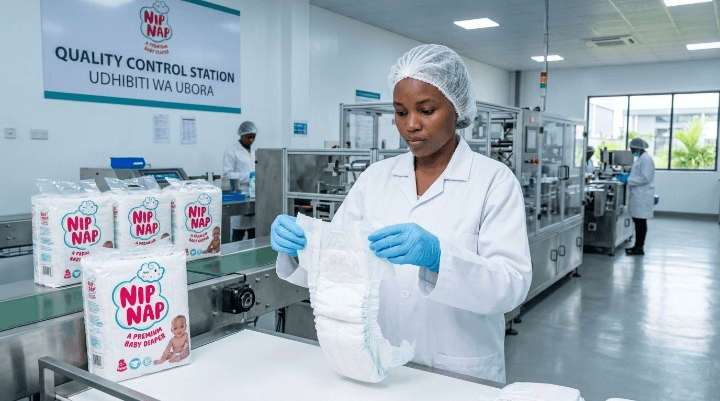
For years, a lot of Kenyan parents assumed the safest nappy was the one that came from overseas. If it was imported, the thinking went, it must have passed stricter checks. So it's a fair question to ask: are locally made nappies in Kenya safe for your baby? The short answer is yes, provided they're made by a licensed manufacturer and carry the right certification. A nappy's safety comes from its materials and the standards it's tested against. Where the factory sits on a map has very little to do with it.
This isn't a brand-versus-brand piece. (If you want that, we've compared NipNap with imported brands separately.) Instead, here's how to judge any nappy on your supermarket shelf, local or imported.
What actually makes a nappy safe?
A nappy sits against your baby's skin for hours at a time, day after day. So safety comes down to a few practical things. What's touching the skin? Does the nappy keep wetness away? Has it been made in a clean, controlled factory, and has someone independent checked it?
When we talk to parents, most of their worries fall into three areas: chemicals and fragrances, rashes, and whether the product is genuine rather than a cheap copy.
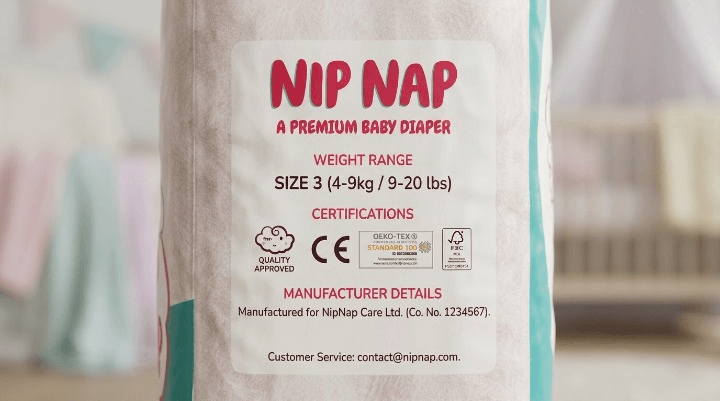
The certifications to look for
Kenya has a clear system for this. The Kenya Bureau of Standards (KEBS) sets and enforces standards for products sold in the country, and a KEBS mark on the pack tells you the product has been assessed against them. ISO certification relates to the manufacturer's quality management systems, and the CE mark is widely recognised for products that meet European requirements.
NipNap, for example, is KEBS certified, ISO certified and CE certified. It's made by Sai Pharmaceuticals Kenya Ltd in Thika, a licensed manufacturer that has been producing hygiene products since 2018. You can read more about the company on our about us page.
Materials: what should and shouldn't be in there
Certification is a good start, but it's worth reading the pack too. For a newborn or a baby with sensitive skin, look for nappies that are:
- Fragrance-free, because added perfumes are a common cause of irritation
- Chlorine-free, dye-free and latex-free
- Made with a breathable backsheet so heat and moisture don't build up
- Soft on the inside, with a top sheet that moves liquid away from the skin quickly
NipNap nappies are completely unscented and are described as dermatologist-tested, chlorine-free, dye-free and latex-free. They use European-grade materials and German technology in their absorbent core. That combination is a good benchmark to hold any nappy up against.
Local vs imported: what really differs?
Here's a simple comparison of the things that genuinely change depending on where a nappy is made, and the things that don't.
| Question | Certified local nappies | Imported nappies |
|---|---|---|
| Tested against Kenyan standards? | Yes, KEBS certification applies | Should be, but check for the KEBS mark |
| Easy to trace the maker? | Manufacturer and address printed on pack | Often only a distributor is listed |
| Stock reliability | Produced locally, so supply is steadier | Depends on shipping and import timelines |
| Price | No import costs added | Import and shipping costs usually passed on |
| Quality of materials | Depends on the maker, not the country | Depends on the maker, not the country |
| Customer support | Local team you can call | Often through a local agent |
The row that matters most is the fifth one. A well-made local nappy and a well-made imported nappy can use very similar materials. A poorly made nappy is poorly made wherever it comes from.
How to spot a nappy you shouldn't trust
Counterfeit and repackaged nappies do turn up in some markets. A few warning signs:
- No manufacturer name or physical address on the pack
- No KEBS mark, or a mark that looks printed on as an afterthought
- A strong smell when you open the pack
- Nappies that feel rough, lumpy or unusually thin
- A price that seems far too good to be true
If you're unsure, buy from established outlets. NipNap is stocked at MyDawa, Carrefour and Greenspoon, and our guide to where to buy diapers in Kenya lists more options.
What Kenyan parents say
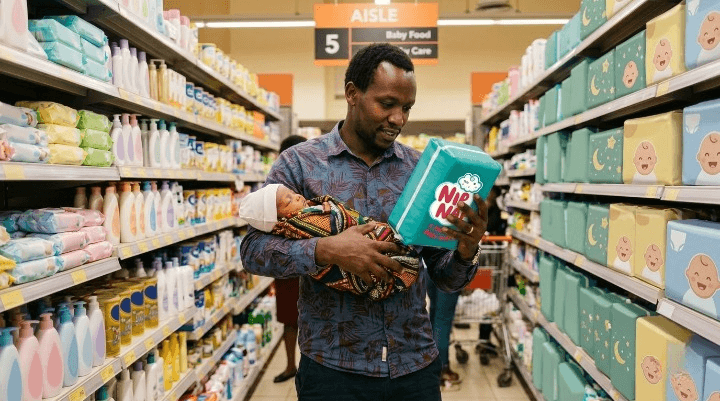
Numbers and certificates only tell you so much. The real test is thousands of babies wearing the nappy night after night. One parent in our customer reviews said she'd used NipNap since her baby was a newborn with no allergies at all. That kind of feedback, repeated across many families, is a better guide than any label.
Locally made can mean well made
So, are locally made nappies in Kenya safe? When they're made by a licensed manufacturer, carry KEBS certification and use gentle, fragrance-free materials, the answer is yes. Check the pack, buy from trusted outlets and watch how your baby's skin responds in the first week. If you'd like to see how our nappies are put together, our disposable diapers page explains each layer.
Choose Locally Made Nappies in Kenya You Can Trust
NipNap is KEBS, ISO and CE certified, made in Thika by Sai Pharmaceuticals Kenya Ltd, and gentle enough for newborn skin.