

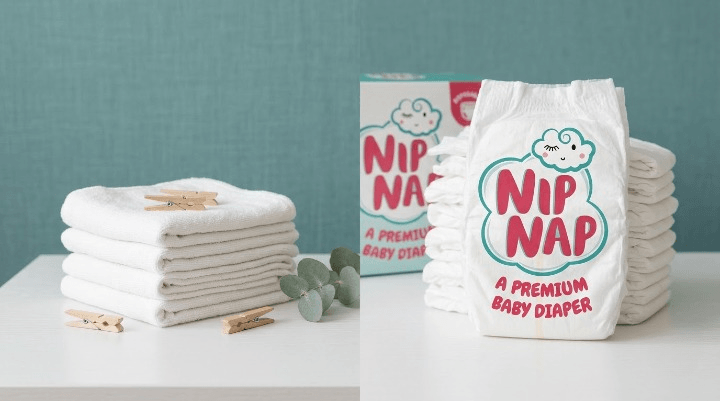
Ask ten Kenyan parents about cloth vs disposable nappies in Kenya and you'll probably get ten firm opinions. Grandmothers swear by the cloth nappies they used for every one of their children. Working parents in Nairobi often can't imagine life without disposables. Both groups have a point, and the right choice depends far more on your daily routine than on which option is "better" in theory.
We've already written a detailed cost comparison of disposable diapers vs cloth nappies, so we won't repeat the shillings here. This piece looks at the other differences: how each type works, what it asks of your time and water supply, and how it treats your baby's skin.
How cloth nappies work
Cloth nappies are reusable. The traditional kind is a square of cotton folded and fastened, often with a waterproof cover over the top. Modern versions come shaped, with snaps and inserts. After use, they're rinsed, soaked, washed and dried, then used again.
Cotton is soft and it breathes, which is why so many parents trust it. The downside is that cotton holds moisture against the skin once it's wet. There's no layer pulling the wetness away, so cloth nappies need changing as soon as they're wet, which for a newborn can mean well over ten changes a day.
How disposable nappies work
A disposable nappy is built in layers, each with a job. On a NipNap nappy, the soft breathable top sheet sits against your baby's skin and moves liquid down quickly. Underneath, a 3D absorbent core spreads that liquid out and locks it away. A breathable backsheet keeps the outside dry while letting air through, and elastic leg cuffs and a stretchy waistband form a seal where leaks usually happen.
The practical result is that skin stays drier for longer between changes. NipNap nappies are designed for up to 12 hours of dryness, which is what makes a full night's sleep more realistic.
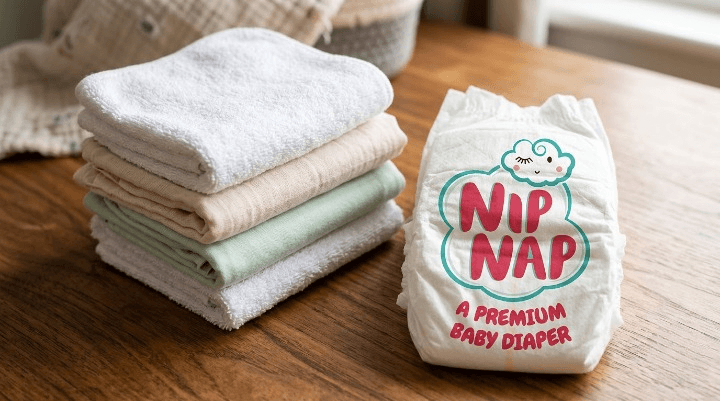
Cloth vs disposable nappies side by side
Here's how the two compare on the things Kenyan parents tell us matter most day to day.
| Factor | Cloth nappies | Disposable nappies |
|---|---|---|
| Dryness against skin | Wet as soon as used, so frequent changes are needed | Top sheet and absorbent core keep skin drier for longer |
| Night-time | Usually need at least one change overnight | Up to 12 hours of dryness with the right size |
| Water and washing | Daily soaking, washing and drying | No washing needed |
| Drying time | Slow in rainy season or small flats | Not applicable |
| Out and about | Need a bag for used cloths until you get home | Roll up and dispose of |
| Childminder or daycare | Some carers prefer not to handle them | Widely accepted |
| Leak protection | Depends on fold and cover | Leg cuffs and elastic waistband seal the edges |
Time and water: the part people underestimate
The biggest difference between cloth and disposable isn't really the nappy itself. It's the laundry. Cloth nappies mean a daily wash, and soiled ones need rinsing first. In homes that rely on stored water or that share washing lines, that can become a real strain, particularly during the long rains when nothing dries.
If someone at home has time for that routine, cloth can work well. If both parents work, or your baby goes to a daycare in town, disposables usually fit more easily into the week.
What about your baby's skin?
Both options can be kind to skin if they're changed often enough. Nappy rash mostly comes from wetness and friction sitting on the skin for too long. With cloth, that means changing the moment it's wet. With disposables, it means choosing a breathable, fragrance-free nappy and changing it when it's full or dirty.
NipNap nappies are unscented and are made from materials described as chlorine-free, dye-free and latex-free, with a breathable backsheet to reduce heat building up inside. For more on keeping skin healthy, see our tips on avoiding nappy rash.

Can you use both?
Plenty of families do, and we think it's a sensible middle ground. Some parents use cloth at home during the day and switch to a disposable at night or when they're out. Others use disposables for the newborn weeks, when changes are most frequent, and try cloth later.
If you like the idea of cloth mainly for environmental reasons, our pieces on cloth diapers in Kenya and eco-friendly diapers in Kenya go into that side in more depth. It's also worth knowing that NipNap is made at a solar-powered factory in Thika that follows NEMA environmental guidelines.
Choosing between cloth and disposable nappies in Kenya
There's no single right answer to cloth vs disposable nappies in Kenya. Cloth suits families with time, water and space to wash and dry every day. Disposables suit busy households, night-time sleep and days out. Whatever you choose, change often, get the fit right and pick materials that are gentle on your baby's skin. If you'd like to try a disposable that's made here, our disposable diapers come in sizes from newborn to 22 kg.
Try Disposable Nappies Made in Kenya
NipNap nappies combine a soft breathable top sheet, a 3D absorbent core and snug leg cuffs for up to 12 hours of dryness, day or night.