

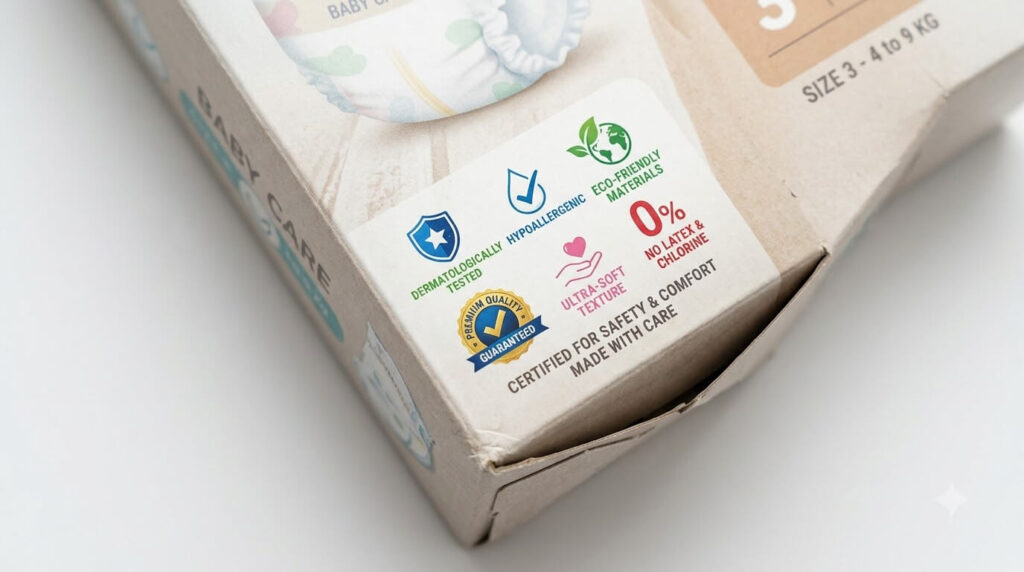
The pack always looks reassuring. Bright colours, "12-hour protection", a happy baby on the front. What's printed in the small corner of that pack matters a lot more than the marketing above it, and that's where diaper certifications Kenya shoppers should actually be checking come in: KEBS, ISO and CE. Three sets of letters, three different things being checked, and most parents have no idea what any of them actually confirm.
Here's the short version: none of these marks tell you a nappy is "the best". What they tell you is that someone independent checked the product or the process behind it, rather than taking the manufacturer's word for it. That's a meaningfully different promise, and it's worth understanding before you compare brands.
Why Certification Matters More Than the Packaging
Anyone can print "premium" or "hypoallergenic" on a pack. Those words aren't regulated, and nobody checks them before the product hits a shelf. Certification marks are different — they're issued (or self-declared against a defined standard) after specific testing, and a brand that gets it wrong can lose the certification. That's the whole point of checking for them rather than trusting the copywriting.
KEBS — Kenya's Own Standard
KEBS stands for the Kenya Bureau of Standards, and it's the local benchmark for products sold in Kenya. A KEBS mark on a diaper means the product has been checked against Kenyan safety and quality standards specifically — not just standards written for a different market and assumed to translate. For diapers manufactured locally, it's also a signal that the factory itself is being monitored, not just a one-off batch that happened to pass.
ISO — Checking the Process, Not Just the Product
ISO (International Organization for Standardization) certification works a little differently. Rather than testing one pack off the shelf, it looks at whether the manufacturing process itself is consistent, documented and repeatable. In practice, that means the diaper you buy this month should be made to the same standard as the one you buy next month — same materials, same quality checks, same process. It's less exciting to explain than "this diaper passed a test", but it's arguably more useful, because it's about consistency over time rather than a single snapshot.
CE Marking — An International Safety Signpost
CE marking is recognised widely across European markets and, by extension, used internationally as a general safety signpost. It's not Kenya-specific the way KEBS is, but seeing it alongside local certification adds another layer of reassurance — particularly for materials and components sourced internationally, which is common in diaper manufacturing even for brands made in Kenya.
| Certification | What It Checks | Why It Matters to Parents |
|---|---|---|
| KEBS | Compliance with Kenya's own product safety and quality standards | Confirms the diaper has been checked against Kenyan rules — not just imported and relabelled |
| ISO | Consistency and quality management of the manufacturing process itself | Shows the factory has repeatable, documented processes — not a single lucky batch |
| CE | Meets baseline safety requirements recognised across European markets | A widely recognised international quality signpost, though not Kenya-specific on its own |
How to Actually Check Before You Buy
In practice, this is a two-minute job:
- Check the pack itself — certification marks are usually printed on the side or back panel
- Check the brand's own website for a statement about their certifications, ideally with some detail rather than just a badge image
- Ask the retailer or stockist directly if it isn't obvious — a brand confident in its certification will have no trouble answering
- Be wary of vague claims with no certifying body named at all — "internationally certified" without saying by whom is a red flag, not a reassurance
Where NipNap Stands
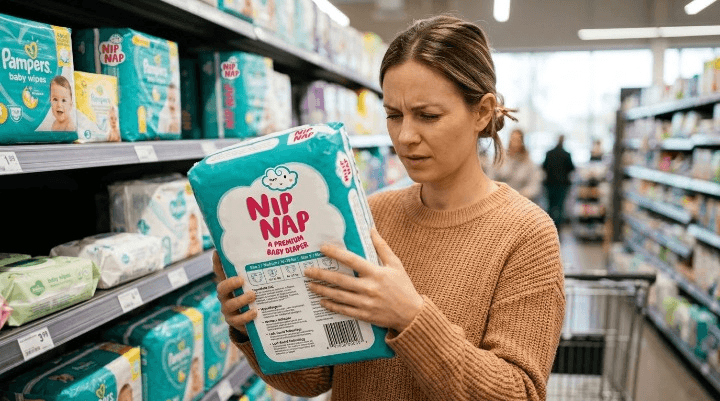
NipNap diapers are KEBS Certified, ISO Certified and CE Certified, manufactured by Sai Pharmaceuticals Kenya Ltd at a facility in Thika — genuinely made in Kenya rather than imported and repackaged. That local manufacturing base is part of why the certification matters in the first place: it's easier to trust a standard when the factory behind it is being checked regularly, not just the shipment that happened to arrive this quarter.
If you want to see the fuller picture of how that plays out in the actual product — materials, absorbency layers, sizing — the NipNap diapers page breaks it down feature by feature, and parent reviews give a sense of how that translates in daily use rather than on paper.
None of this means you should ignore comfort, fit or price when choosing a diaper — those still matter day to day. But checking for genuine diaper certifications Kenya authorities and international bodies actually recognise is a fast way to narrow the field before you get to the part where you're comparing how a nappy feels against your baby's skin.
Certified Quality, Made in Kenya
NipNap is KEBS Certified, ISO Certified and CE Certified — manufactured locally in Thika, not imported and relabelled.