


Kenya's heat and humidity don't just make afternoons sticky, they make a baby's skin work harder than it would in a cooler climate. Combine warm weather with hours in a wet diaper, and diaper rash becomes one of the most common reasons parents message us, or their doctor, in a baby's first year.
The good news is that diaper rash prevention Kenya families can actually rely on has less to do with which brand you buy and more to do with a handful of daily habits. This guide covers why rash shows up more here than in cooler regions, what actually causes it, how to prevent it, what's reasonable to try at home, and when it's time to stop managing it yourself and call a doctor.
Why Kenya's Climate Makes Rash More Common
Diaper rash is fundamentally a moisture problem, and Kenya's climate stacks the odds against dry skin in a way a cooler country doesn't. Warm, humid air slows evaporation, so once a diaper is wet, that moisture sits against the skin for longer before it has any real chance to dry out, even inside a diaper marketed as breathable. Coastal towns and the humid stretches around Lake Victoria feel this hardest, but even Nairobi's hot, dry-season afternoons raise skin temperature enough to soften the outer skin barrier, which makes it easier for urine and stool to irritate it. Add sweat from a hot afternoon, a nap under a blanket, or a long journey by matatu, and a diaper that would hold up fine for six hours in cooler weather can start causing redness in four.
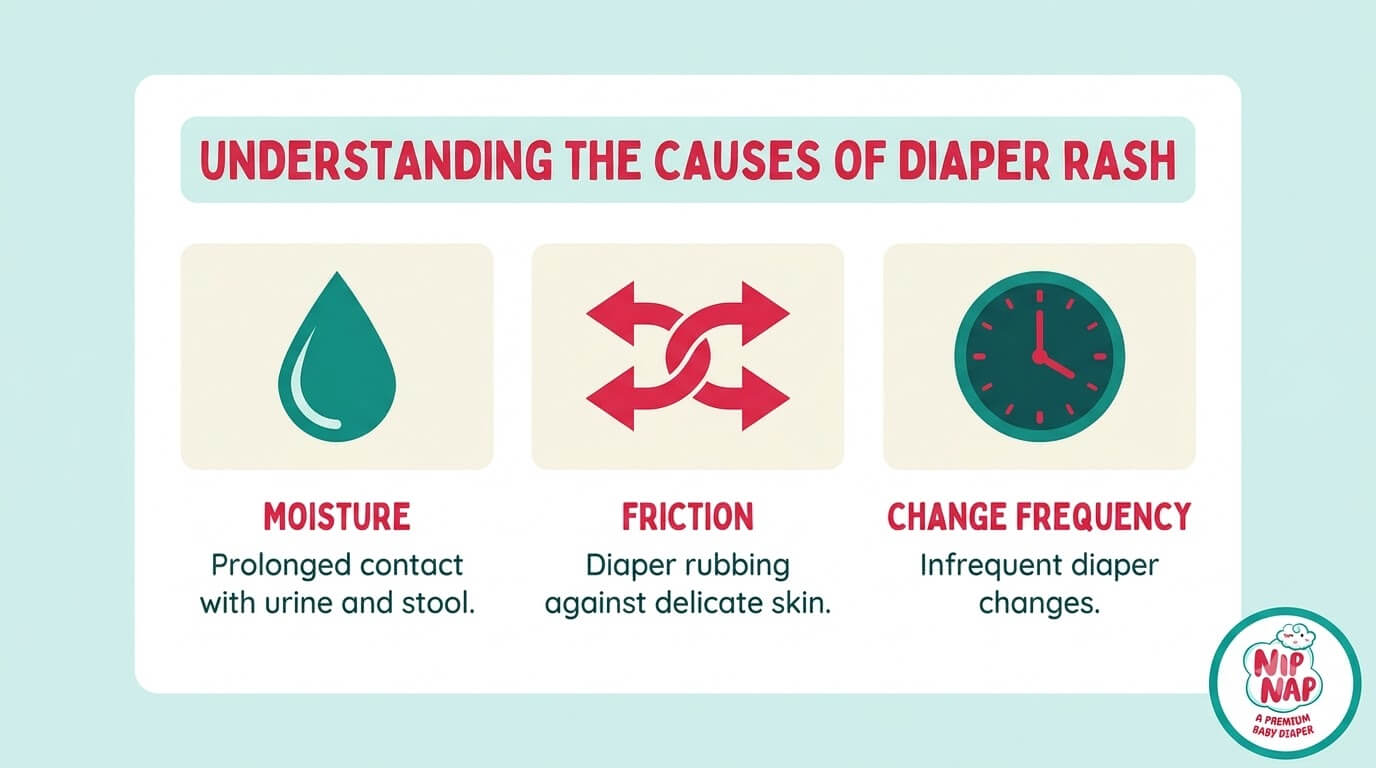
The Main Causes: Moisture, Friction, and Change Frequency
Climate sets the stage, but three specific factors do the actual damage. Prolonged moisture contact is the biggest one: urine raises the skin's pH, which breaks down its natural protective barrier and lets in the bacteria and enzymes from stool that cause most of the redness parents see. Friction compounds it — a diaper that's too tight, too loose, or the wrong size for your baby's weight rubs against the same patches of skin with every movement, which is often why rash tends to show up first at the leg creases or waistband line rather than spreading evenly. Change frequency ties both of these together: the longer a wet or soiled diaper stays on, the more time moisture and friction have to work against the skin, which is why even a well-fitted, good-quality diaper can still cause rash if changes happen too far apart.
The World Health Organization's postnatal care guidance for newborns lists keeping the skin clean and dry as one of the basic pillars of routine infant hygiene, alongside cord care and regular bathing, precisely because unmanaged moisture against an infant's skin is a well-recognised driver of skin breakdown (WHO postnatal care recommendations).
Prevention: Materials, Sizing, and Change Frequency That Actually Help
Three habits do most of the preventive work, and none require special products beyond what's already on the shelf.
Breathable materials matter more in Kenya's climate than in cooler countries. A back sheet that lets water vapour escape while keeping liquid in reduces the greenhouse effect that traps heat and moisture against the skin. NipNap's breathable, fragrance-free diapers are built with exactly this in mind for babies dealing with Kenyan heat.
Correct sizing avoids the friction problem almost entirely. Go by your baby's weight printed on the pack rather than the age range, and check for red marks at the leg or waistband after a few hours — that's usually a sizing issue rather than a product issue. If you're still narrowing down which disposable diapers in Kenya fit your baby's skin and budget, that decision affects rash risk too, not just convenience.
Change frequency is the simplest lever you have. Aim for roughly every two to three hours during the day for a young baby, change immediately after a bowel movement regardless of the clock, and don't stretch an overnight diaper further than its stated capacity, even if it still looks dry from the outside.
Mild Rash vs When It Needs Medical Attention
| Sign | Mild — Manageable at Home | Needs a Doctor |
|---|---|---|
| Appearance | Pink or light red patches | Bright red, spreading quickly |
| Skin surface | Intact, maybe slightly rough | Blistering, open sores, or pus |
| Baby's behaviour | Mildly fussy during changes | Crying constantly, won't tolerate touch |
| Duration | Improving within 2–3 days of home care | Getting worse after 3 days |
| Other symptoms | None | Fever, or rash spreading beyond the diaper area |
This table is a general guide, not a diagnosis. If you're ever unsure which column your baby falls into, treat it as a reason to call a doctor rather than wait.
What to Try at Home for Mild Rash
For a mild case — redness without broken skin — there's a simple routine most parents are advised to try before reaching for anything stronger. Change the diaper as soon as you notice wetness rather than waiting for the next scheduled change. Let the skin air-dry for a few minutes before putting on a fresh diaper; this alone reduces moisture contact time noticeably. Use plain water or a fragrance-free wipe rather than a scented one, since fragrance and alcohol are common irritants on skin that's already compromised. A thin layer of a zinc-oxide barrier cream at each change can help protect the skin while it recovers — ask your pharmacist which one they'd recommend rather than assuming any diaper cream does the same job. None of this replaces medical advice if the rash doesn't respond; it's simply the first, reasonable step most parents try.

When to Stop Self-Managing and See a Doctor
Most diaper rash clears up within two to three days of consistent home care. If it doesn't, it's time to call a doctor rather than keep trying home remedies.
See a doctor if you notice:
- The rash spreading beyond the diaper area onto the stomach or thighs
- Blistering, open sores, or pus, which can point to a yeast or bacterial infection needing prescription treatment
- A fever alongside the rash
- No improvement after a few days of consistent, correct home care
This isn't about alarming you — most diaper rash is genuinely minor and settles with the basics above. It's about recognising the specific signals that mean a home routine isn't enough, so you're not guessing at week two what should have been a quick doctor's visit at day three.
FAQ: Diaper Rash Prevention Kenya
Does diaper rash mean I'm doing something wrong as a parent?
No. Most babies get diaper rash at least once, often more, regardless of how careful their parents are. Kenya's climate simply makes it more common, not a reflection of your routine.
Can teething make diaper rash worse?
Many parents notice a rash appearing around teething, possibly linked to slightly more acidic stool during that stretch. It isn't a proven direct cause, but it's a common enough pattern that it's worth extra vigilance with changes during teething weeks.
Does a more expensive diaper prevent rash better?
Not necessarily. Correct sizing and change frequency generally matter more than price. A well-fitted, breathable diaper changed on time will usually outperform a premium one that's the wrong size or left on too long.
Can I use barrier cream and a breathable diaper together?
Generally yes, they're complementary rather than conflicting. Apply cream in a thin layer rather than a thick one, since a very heavy layer can sometimes interfere with how quickly the diaper absorbs moisture.
Diaper Rash Prevention Kenya Parents Can Start Today
NipNap's breathable, fragrance-free diapers are designed with Kenya's climate in mind, so moisture doesn't sit against your baby's skin longer than it has to.