
Not every pack that says "proudly Kenyan" on the front is actually made here. Some diapers are manufactured overseas, shipped in bulk, and relabelled at a local warehouse with a flag sticker that tells you nothing about where the real production happened. If you're trying to choose genuinely diapers in Kenya made by a real local manufacturer, it helps to know what "Made in Kenya diapers" should actually mean, and how to spot the difference between local manufacturing and a marketing claim sitting on top of an imported product.
What "Made in Kenya" Actually Requires
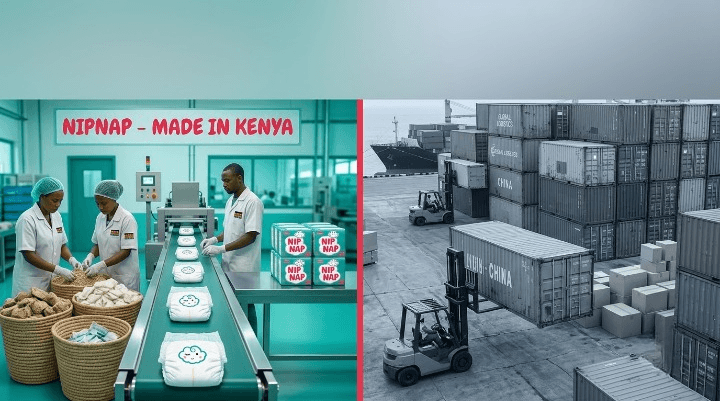
Genuine local manufacturing means the diaper is produced, start to finish, inside a Kenyan facility: raw materials are brought in, and the actual converting, assembly, and packaging happen on Kenyan soil, under Kenyan labour and quality oversight. The company has a real, physical factory you could visit, with a name and address you can check.
Imported-and-repackaged is a different business model wearing similar packaging. A company buys finished diapers from an overseas factory, ships them in bulk, then relabels or re-boxes them at a local warehouse before putting them on Kenyan shelves. Legally, that company can say the product is "distributed in Kenya" or even lean on vague Kenyan-sounding branding. What it cannot honestly claim is that the diaper was made here, because the manufacturing already happened somewhere else, long before the box touched Kenyan soil.
The difference matters for more than pride. It shapes price, it shapes how quickly stock returns to shelves after a shortage, and it shapes how easy it is to verify what you're actually buying, which is exactly what the next few sections get into.
This matters more for a diaper than for most household products, since it's worn directly against a newborn's skin for hours at a stretch. A manufacturer with a real Kenyan facility can be inspected, held to KEBS testing standards, and traced batch by batch if something goes wrong. An importer working through several middlemen offers none of that same accountability, even if the packaging looks identical on the shelf.
How Local Manufacturing Affects Price and Supply
An imported diaper carries costs that never touch a locally made one: freight, import duty, and currency conversion, all baked into the shelf price before a single nappy reaches a Kenyan baby. When the shilling weakens against the dollar or euro, importers either absorb the hit or pass it straight to parents, and shelf prices can jump overnight for reasons that have nothing to do with the product itself.
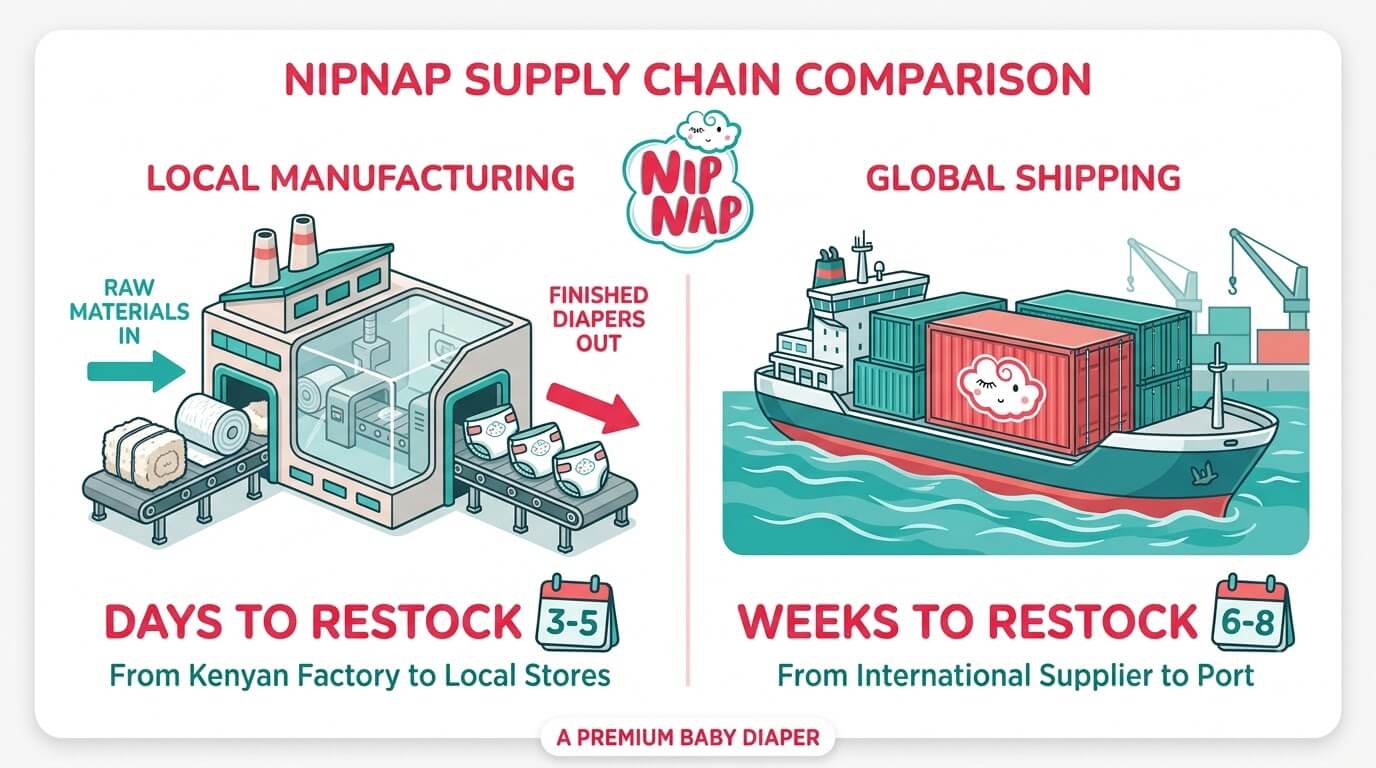
Supply reliability tells a similar story. A container stuck at the Port of Mombasa, a shipping delay, or a customs hold-up can mean weeks of empty shelves for an imported brand, no matter how strong local demand is. A Kenyan factory sources its inputs through shorter, more diversified supply lines and can usually respond to a demand spike in days rather than months, because the whole production chain sits inside the country's borders rather than at the mercy of international shipping schedules.
Lead times tell the same story from a different angle. A local factory can usually turn around a fresh production run within days of a stock alert from a retailer. An imported brand is working against shipping schedules measured in weeks, sometimes longer once customs clearance is added, which is exactly why some imported sizes vanish from shelves for stretches at a time while local brands stay in stock.
This is a big part of why local manufacturing directly affects diaper pricing across the Kenyan market, and why prices for genuinely local brands tend to move less dramatically than imported ones when the currency shifts.
Made in Kenya vs. Imported: A Quick Comparison
| Factor | Made in Kenya | Imported |
|---|---|---|
| Shelf price exposure to KES swings | Lower | Higher |
| Freight & import duty in the price | None | Built into shelf price |
| Restock speed after a shortage | Days | Weeks, sometimes longer |
| Factory traceable and inspectable | Yes | Not from Kenya |
| Local jobs supported per purchase | Yes | Minimal |
Individual brands vary, so treat this as the general pattern rather than a claim about any specific imported product.
The Economic Case for Buying Local
There's a wider argument here that goes beyond any single household's shopping basket. Money spent with a Kenyan manufacturer tends to stay in the Kenyan economy: it pays local wages, it moves through local suppliers and transport companies, and a share of it returns as tax revenue that funds public services. Money spent on a fully imported product mostly leaves the local economy the moment the purchase is made, since the wages, materials, and profit sit with a business elsewhere.
This is the logic behind Kenya's "Buy Kenya, Build Kenya" initiative, which encourages consumers and institutions to favour locally produced goods as a way of strengthening domestic industry and reducing the country's reliance on imports. The Kenya Association of Manufacturers (KAM), the industry body representing Kenyan manufacturers since 1959, has long pushed for exactly this: stronger quality standards for locally made goods, clearer certification, and policy support that helps Kenyan factories compete on a fairer footing against imports.
There's a concrete local example in this too. Sai Pharmaceuticals Kenya Ltd, the manufacturer behind NipNap, directly employs more than 250 people at its Thika facility alone, work that exists in Kenya specifically because the manufacturing does. Multiply that pattern across the dozens of Kenyan factories producing everyday goods, and the case for buying local stops being an abstract policy argument and starts looking like actual jobs, actual wages, and actual tax revenue staying inside the country.
None of this means every imported product is a poor choice. It means the multiplier effect of local spending is real and worth factoring in, particularly for everyday essentials like diapers, where Kenyan households already spend a meaningful share of their monthly budget.
How to Verify a Diaper's Manufacturing Origin
Most parents don't have time to investigate every brand on the shelf, but a few quick checks separate a genuinely local manufacturer from a repackaged import.
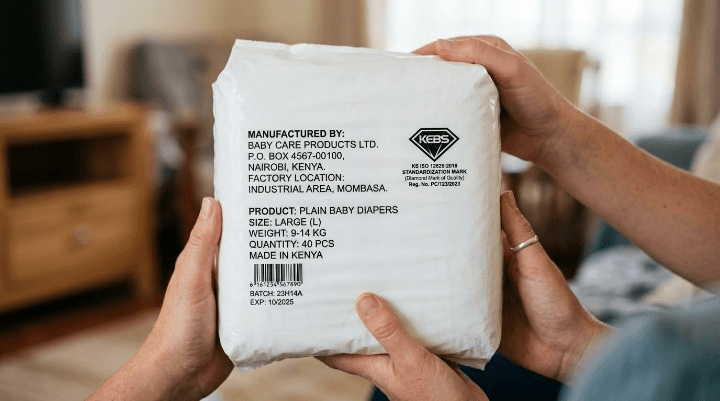
- Look for a manufacturer's name and physical address printed on the pack, not just a distributor's contact details or a generic customer care number
- Check for a KEBS certification mark, which shows the product has actually been tested against Kenyan standards rather than simply assumed safe
- Search the company name if it's unfamiliar; a genuine manufacturer should have a registered business and a real trading history, not just a social media page and a WhatsApp number
- Ask the retailer directly where a product is manufactured, since most Kenyan supermarkets and pharmacies know their suppliers well enough to answer on the spot
- Treat vague claims like "proudly African" or "local favourite" with a little scepticism if there's no factory location or certification standing behind them
NipNap and Sai Pharmaceuticals: A Kenyan Manufacturing Story
NipNap is a useful worked example of what "Made in Kenya" looks like when it's genuine rather than a marketing line. The brand is produced by Sai Pharmaceuticals Kenya Ltd, established in 2018 and based in Thika, on the outskirts of Nairobi. It isn't a warehouse relabelling imported stock; it's a full manufacturing facility employing more than 250 people, running production lines that convert raw materials into finished diapers, wipes, and related hygiene products on site.
The factory holds KEBS, ISO, and CE certification, runs on solar power, and follows NEMA environmental compliance for waste and effluent management, details that a purely importing business simply wouldn't need to have in place. NipNap products reach parents through Mydawa, Carrefour, and Greenspoon, as well as direct ordering over WhatsApp, but the manufacturing itself never leaves Kenyan soil.
That combination, a named company, a verifiable factory address, and certification you can actually check, is what "Made in Kenya" should mean on any pack you pick up. It's a reasonable standard to hold every brand of diapers in Kenya to, not just the one that happens to say so on the box.
None of this means an imported diaper is automatically inferior. Some imported brands are genuinely well-made products. What it does mean is that "Made in Kenya" is a specific, checkable claim rather than a vague feel-good line on the packaging, and it is worth treating it that way the next time a pack on the shelf makes the promise.
FAQ: Made in Kenya Diapers
How can I tell if a diaper is really made in Kenya?
Check the pack for a manufacturer's name and physical address, not just a distributor's contact line, and look for a KEBS certification mark. A genuine local manufacturer will also show up in company registries and have a real trading history beyond a social media page.
Are locally made diapers as good as imported ones?
Quality depends on the specific manufacturer, not on the country alone. A KEBS, ISO, and CE-certified Kenyan facility, like the one behind NipNap, meets the same international testing standards that a reputable imported brand would.
Why do imported diapers sometimes disappear from shelves?
Imported stock depends on shipping schedules and customs clearance, so a delay at the port or a currency shift can mean weeks without restock. Locally manufactured diapers aren't exposed to the same shipping risk.
Does buying local actually make a difference to the economy?
Yes. Money spent with a Kenyan manufacturer pays local wages, moves through local suppliers, and returns as tax revenue, which is the reasoning behind Kenya's Buy Kenya, Build Kenya initiative and the Kenya Association of Manufacturers' advocacy for local industry.
Where is NipNap actually manufactured?
NipNap is manufactured by Sai Pharmaceuticals Kenya Ltd at a KEBS, ISO and CE-certified facility in Thika. You can read more about the factory and the company on our About Us page.
Choose Made in Kenya Diapers, Not Just Ones Labelled For It
NipNap is manufactured at our own KEBS, ISO and CE-certified facility in Thika, no relabelling, no middlemen.