


Some babies can wear almost any nappy without a mark. Others go red after a single afternoon in the wrong brand. If your little one falls into the second group, choosing nappies for sensitive skin in Kenya can feel like trial and error, with a new pack every week and a sore bottom to show for it. It doesn't have to be that way. Once you know what to look for on the pack and in the nappy itself, the list of suitable options gets much shorter.
Signs your baby has sensitive skin
Every baby gets the odd bit of redness. Sensitive skin is when it happens often, or reacts quickly to small changes. Common signs include:
- Redness that appears soon after trying a new nappy or wipe
- Red marks along the waistband or leg cuffs that don't fade quickly
- Dry, rough patches in the nappy area
- Rashes that return soon after clearing up
- Irritation that seems worse with scented products
If your baby has eczema elsewhere on their body, the nappy area is often sensitive too.
What to look for in a nappy for sensitive skin
When you're comparing brands, read past the front of the pack and check these points.
| What to check | Why it matters | What to look for |
|---|---|---|
| Fragrance | Added perfumes are a common irritant | Completely unscented or fragrance-free |
| Chlorine, dyes and latex | Can trigger reactions on delicate skin | Chlorine-free, dye-free, latex-free |
| Top sheet | This layer touches the skin all day | Soft, breathable, moves liquid away fast |
| Backsheet | Trapped heat and moisture worsen rashes | Breathable, lets air through |
| Absorbent core | Wetness on the skin causes most rashes | Spreads and locks liquid away from skin |
| Elastic edges | Tight or rough edges cause friction marks | Soft leg cuffs and a stretchy waistband |
| Certification | Shows the product meets set standards | KEBS mark, plus ISO or CE if listed |
A nappy that ticks every row in that table won't guarantee your baby never gets a rash, but it removes most of the usual triggers.
How NipNap is made for sensitive skin
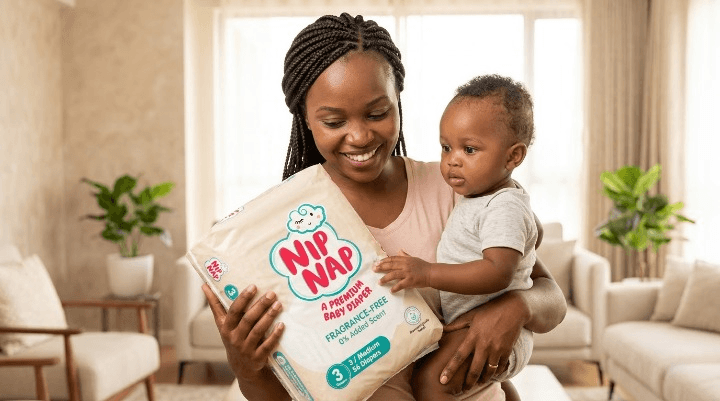
We'll be upfront that we make nappies, so read this section with that in mind. NipNap nappies are completely unscented, with no added fragrances or perfumes. They're described as dermatologist-tested and made from chlorine-free, dye-free and latex-free materials.
The soft breathable top sheet wicks liquid down into a 3D absorbent core, which spreads it through the nappy rather than letting it pool against the skin. The breathable backsheet is waterproof on the outside but lets air through, which keeps heat from building up. Elastic fasteners and soft leg cuffs are designed to stretch with your baby without leaving marks.
For toddlers, our baby pants have an outer-sealed waistband. Most pants are sealed on the inside, where the seam can rub. On NipNap pants the seal sits on the outside, so the inside stays smooth against the skin. You can see the full feature list on our disposable diapers page.
Don't forget the wipes
A gentle nappy can still be let down by harsh wipes. For sensitive skin, avoid wipes with alcohol, strong fragrance or dyes. NipNap baby wipes are alcohol-free, chlorine-free, paraben-free and dye-free, with chamomile and marigold extracts and added moisturiser. They're wide and soft, so you need fewer per change and do less rubbing.
How to test a new brand safely
Switching brands with a sensitive baby is best done slowly.
- Buy the smallest pack available first
- Try it during the day, when you can check the skin at every change
- Give it three to five days before judging
- Change only one product at a time, so you know what caused any reaction
- Keep a note of what you notice, including marks from the elastic
If there's no redness after a few days of daytime use, try it overnight.
Size matters for sensitive skin too
A nappy that's too small rubs at the legs and waist. One that's too big lets wetness escape and move around. Both can irritate sensitive skin. Always choose by weight using our baby diaper sizes chart, and for day-to-day skin care, our guide to avoiding diaper rash has more practical tips.
When to get advice
If your baby's skin reacts to every brand you try, or a rash is raw, blistered or spreading, speak to your clinic or a health worker. Some skin conditions need more than a nappy swap.
Picking the right nappies for sensitive skin in Kenya
The best nappies for sensitive skin in Kenya are fragrance-free, chlorine-free and breathable, with a core that keeps wetness away and soft edges that don't rub. Pair them with gentle wipes, size by weight and introduce new products one at a time. Other parents have shared how their babies' skin has responded in our customer reviews, which is worth a read before you choose.
Gentle Nappies for Sensitive Skin in Kenya
NipNap nappies are unscented, chlorine-free, dye-free and latex-free, with a breathable backsheet and soft leg cuffs made for delicate skin.