

It's 2am, the cot sheet is soaked, and you're wondering why the nappy you bought specifically because it promised "12-hour dryness" has let you down again. If this sounds familiar, you're not alone, overnight leaks are, by far, the most common frustration parents raise when searching for the baby nappies Kenya has to offer.
Here's the good news: in most cases, the nappy isn't the problem. The fit is. Once you understand what actually causes overnight leaks, choosing (and fitting) a genuine 12-hour nappy becomes far simpler.
Why Most Overnight Leaks Are a Fit Issue, Not an Absorbency Issue
It's tempting to assume a leak means the nappy "wasn't absorbent enough." In reality, most modern nappies, including those built for overnight wear, have more than enough absorbent core to handle a full night of wetting. The trouble usually starts somewhere else entirely: at the edges.
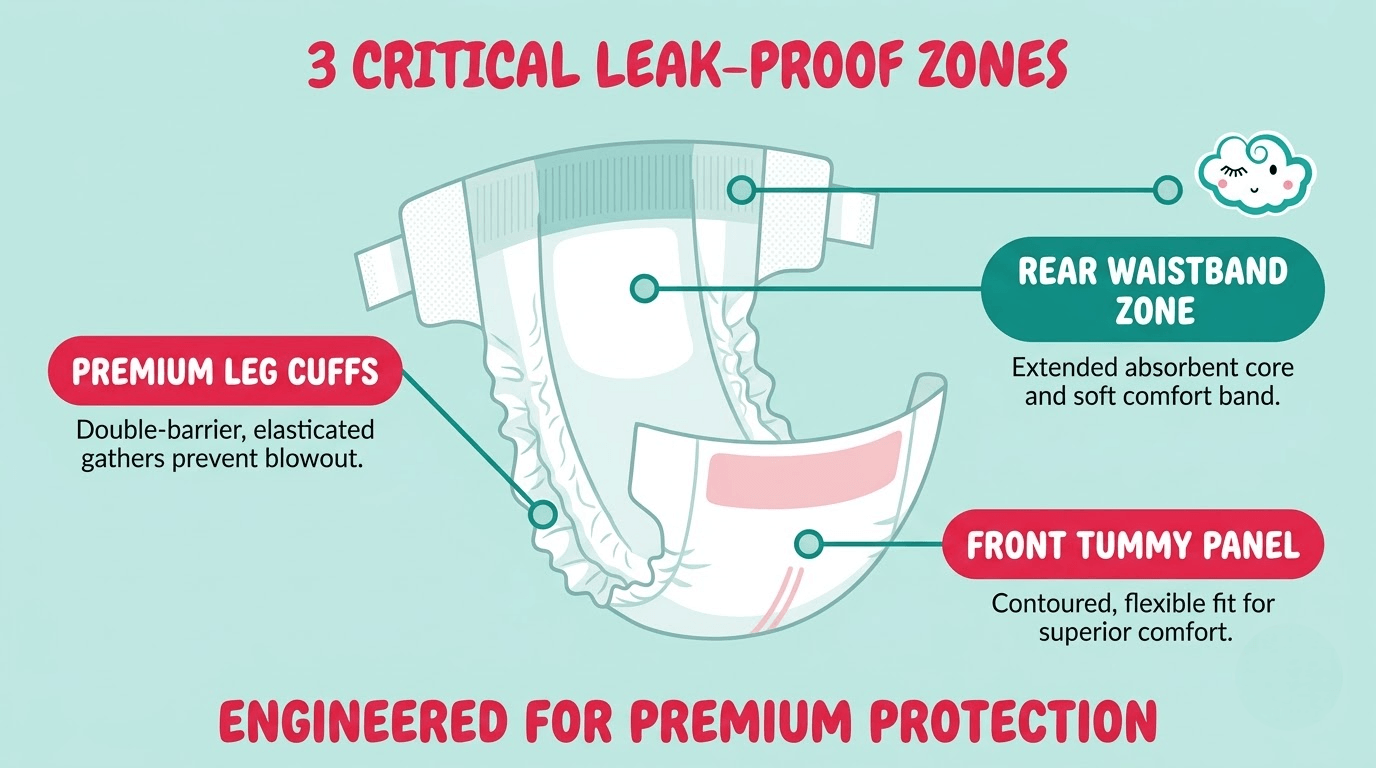
Leaks happen where liquid escapes the nappy, not where the core runs out of capacity. That means the two areas doing the real work of containment are:
- The leg cuffs (stopping side leaks)
- The waistband and tummy panel (stopping back leaks and blow-outs)
If either of these isn't sealed snugly against your baby's skin, urine finds the gap long before the absorbent core is anywhere near full. This is why two parents can use the exact same nappy, on babies of a similar size, with completely different results, one dry baby, one soaked cot sheet. The nappy is identical. The fit is not.
The Role of Leg Cuffs and Waistband Fit in Preventing Side Leaks
Think of a nappy as having two separate jobs: absorbing liquid, and containing it long enough to be absorbed. Leg cuffs and waistbands handle containment, and overnight is when they're tested hardest, because your baby is lying down, moving, and wetting for far longer stretches than during the day.
| Leak location | Usual cause | What to check |
|---|---|---|
| Side of the thigh | Leg cuffs tucked in or flattened | Run a finger around each leg: cuffs should stand away from the skin, not lie flat |
| Lower back / bottom of the nappy | Nappy sagging or sized too low | Waistband should sit at the natural waist, not slipping onto the hips |
| Front, near the tummy | Waistband gapping when baby is on their back | Tabs fastened too loosely, or nappy sized too big |
| General sogginess without a visible leak point | Nappy left on too long, or under-sized for output | Consider sizing up or changing timing, not just brand |
A nappy that looks like the right size on the box can still leak if the cuffs aren't pulled out properly at every single change, a two-second check that's easy to skip during a half-asleep night change, but it makes the biggest difference of anything on this list.
How to Know It's Time to Size Up Before Bed, Even If Daytime Sizing Is Fine
This is one of the least understood parts of nappy fit: your baby's daytime size and their overnight size aren't always the same thing.
During the day, nappies are changed every few hours, so the core never has to cope with more than a few hours' worth of wetting at once. Overnight, that same nappy might need to hold 10–12 hours' worth. If your baby is a heavy overnight wetter, or sleeping for longer stretches as they grow, the correctly-fitted daytime nappy can become undersized purely for nighttime purposes.
Signs it's time to size up for bed, even if daytime nappies fit well:
- Leaks consistently happen overnight but rarely (or never) during the day
- The nappy feels heavy and saggy by morning, even without a visible leak
- Red marks appear at the leg or waist from a nappy stretched to its limit
- Your baby has recently had a growth spurt but you haven't changed sizes yet
- You're using the same size for 2+ months without reassessing fit
Sizing up for overnight wear only, while keeping a smaller size for the day, is a completely normal approach, and often solves leaks faster than switching brands entirely.
What "12-Hour Dryness" Actually Depends On
A "12-hour" claim on a pack isn't a single feature: it's the combined result of core technology and correct fit working together. Miss either one, and the promised 12 hours won't hold up in practice.
| Factor | What it does | Why it matters overnight |
|---|---|---|
| Absorbent core technology | Locks liquid away from the skin, preventing rewetting | Keeps skin dry even after multiple wettings in one stretch |
| Leg cuff design | Forms a physical seal around each thigh | Stops liquid escaping sideways before the core absorbs it |
| Waistband elasticity | Keeps the nappy sitting snugly at the correct height | Prevents sagging and back leaks as your baby moves in sleep |
| Correct size selection | Matches the nappy's capacity to your baby's weight and output | Undersized nappies overflow; oversized nappies gap |
| Wearing time | How long the nappy is actually left on | Even the best core has a practical limit: check in the morning, not midnight |
NipNap's 12-hour dry range is built with this in mind, combining a high-absorbency core with contoured leg cuffs and a snug waistband, so the technology has a genuine chance to work as intended, rather than being undone by a loose fit.
It's also worth noting that fit and comfort go hand in hand with skin health overnight. The American Academy of Pediatrics highlights the importance of a well-fitting nappy for comfortable, healthy overnight sleep: a properly fitted nappy isn't just about avoiding a wet cot sheet, it's about keeping your baby's skin dry and undisturbed through the night (HealthyChildren.org).

A Pre-Bedtime Checklist for Parents
Before you settle your baby down for the night, run through this quick checklist. It takes under a minute and addresses almost every common cause of overnight leaks:
- Check the size: does this nappy still fit correctly, or has your baby grown since you last checked?
- Pull out the leg cuffs: gently run a finger around both legs to make sure the cuffs are standing up, not tucked flat against the skin
- Position the waistband at the natural waist: not riding low on the hips
- Fasten tabs evenly: snug, but not so tight it leaves marks
- Consider a fresh nappy right before bed, even if the current one isn't full, so your baby starts the night with maximum capacity
- Avoid bulky nightwear over a tight nappy: clothing that compresses the cuffs can flatten the seal
- If leaks persist after fit checks, try sizing up for overnight wear specifically, rather than changing brands
If you're heading into a hospital stay or the newborn stage soon, it's worth reviewing NipNap's hospital checklist and parenting guides for more on getting nappy sizing and routines right from day one. You can also see how other Kenyan parents rate their overnight experience in our customer reviews.
The Real Fix for Overnight Nappy Leaks
Overnight leaks feel like a nappy failure, but they're almost always a fit conversation in disguise. Before switching brands or assuming a product simply "doesn't work," check the leg cuffs, check the waistband, and check whether your baby has quietly outgrown their overnight size. Combine correct fit with a genuinely engineered 12-hour core, and dry mornings become the norm rather than the exception.
For parents shopping for the baby nappies Kenya families trust for overnight protection, getting the fit right is the single most effective, and free, upgrade you can make tonight.
Get the True 12-Hour Nappy Kenya Parents Rely On
NipNap's overnight range pairs a high-absorbency core with contoured leg cuffs and a snug waistband for genuine 12-hour dryness.