
You’re standing in a Nairobi supermarket aisle, comparing two packs of diapers. One costs almost twice the other. Your baby needs one or the other tonight, and the shelf tag doesn’t tell you which one is actually the better deal.
This happens to almost every parent shopping for diapers in Kenya. The price tag on the front of the pack is only half the story. The other half is how many diapers you’ll actually go through, and that depends on things the packaging doesn’t advertise.
What Diapers Actually Cost, By Size
Prices move around depending on where you shop and what’s on promotion that week, so treat these as a starting point rather than gospel. As a rough guide across supermarkets and pharmacies in Nairobi, Thika, Mombasa, and Nakuru:
- Newborn (up to 5kg): smaller packs, higher price per diaper, since newborns go through more changes per day
- Size 1–2 (3–8kg): the most competitive size range, with the widest gap between budget and premium brands
- Size 3–4 (6–16kg): typically the best value per diaper, since babies in this range wear each diaper for longer stretches
- Size 5–7 (11kg+): fewer brands stock these sizes locally, which pushes prices up simply because there’s less competition on the shelf
Pack count matters more than most parents realise when comparing prices. A 20-pack and a 50-pack of the same brand and size rarely cost the same per diaper. Bigger packs are almost always cheaper per unit, but only worth it if you’re confident about the size before you commit, since a baby can outgrow a size faster than you’d expect.
For a household budgeting month to month, it helps to check current pricing directly at your usual stockist before you plan around a number, since prices do shift with supply and season. What doesn’t shift as much is the logic below.
Cost Per Diaper Isn’t the Number That Matters
Here’s where most price comparisons go wrong. A pack that looks cheap per diaper can end up costing more per month if it leaks and forces extra changes, extra laundry, or a rash cream you wouldn’t otherwise need.
The number that actually matters is cost per dry hour, not cost per diaper. A diaper priced a bit higher but rated for genuinely long wear, particularly overnight, often works out cheaper in practice because you’re changing your baby less often and wasting fewer diapers to leaks.
Do the maths for yourself: take the pack price, divide by the number of diapers, then estimate how many hours of dry wear you’re realistically getting from each one. A KES 15 diaper that leaks after four hours and needs a same-night change is not cheaper than a KES 20 diaper that holds through an eight-hour stretch. It’s more expensive, plus it costs you sleep.
Where You Shop Changes the Price
Supermarkets generally offer the best prices on larger pack sizes, especially during promotions, but stock can run out on popular sizes fast, particularly Size 2 and Size 3.
Pharmacies and chemists tend to charge a premium, but they’re the reliable option at 10pm when the supermarket is closed and your baby has just gone through the last diaper in the house. You’re paying for convenience, not getting a bad deal.
Online and app-based ordering, through platforms like Mydawa or Carrefour’s online store, often works out more competitively priced on bulk or subscription orders, and it saves a trip when you’ve got a newborn and don’t want to be leaving the house more than necessary.
None of these is universally “the cheapest.” The right choice depends on whether you’re stocking up in advance or covering an emergency gap.
Why Prices Jump Around So Much Between Brands
It’s worth understanding why two packs sitting next to each other on the same shelf, both marketed for the same size, can differ so much in price. A few things drive it:
Materials. Absorbent core material, the top sheet against your baby’s skin, and the outer breathable layer all vary in quality and cost between brands. Cheaper materials usually mean a lower price and a shorter dry window.
Import costs. A diaper shipped in from overseas carries freight, duty, and currency conversion costs baked into the shelf price, on top of whatever the diaper itself is worth.
Certification and testing. Meeting KEBS, ISO, or CE standards involves real testing and quality control costs. Brands that skip certification can undercut on price, but you’re trading away the verification that the product is actually safe and consistent batch to batch.
Brand positioning. Some of the price gap is simply marketing spend and brand premium, not a meaningful difference in the diaper itself. This is the hardest one to judge from the shelf, which is exactly why cost per dry hour is a more useful comparison than price alone.
None of this means the most expensive pack on the shelf is automatically the best value, or that the cheapest is automatically the worst. It means the price tag alone doesn’t tell you enough, and it’s worth checking what’s actually behind the number.
What to Do If You’re Working With a Tight Budget
If cost is the deciding factor this month, a few practical moves help more than chasing the single cheapest pack:
- Buy the largest pack size you’re confident about, since per-diaper cost drops as pack size goes up, provided you’re sure of the size
- Watch for supermarket promotions, which tend to cycle regularly on popular sizes and brands, particularly around month-end
- Compare cost per dry hour, not just cost per pack, since a cheaper pack that leaks more often can end up costing you more in extra changes and laundry
- Keep a small emergency pack from a pharmacy on hand, even if it’s pricier per diaper, so you’re never caught needing a late-night, full-price supermarket run out of desperation
Budgeting for diapers isn’t a one-off calculation. It shifts as your baby grows, as pricing moves with supply and season, and as you learn which brand actually holds up for your baby specifically, since absorbency and fit vary slightly from one baby to another even within the same size.
How Local Manufacturing Keeps Prices Down
A meaningful part of why prices vary between brands comes down to where the diaper is actually made. Imported premium brands carry the cost of shipping, import duty, and currency conversion, and that cost lands on the shelf price whether or not the diaper performs any better than a locally made one.
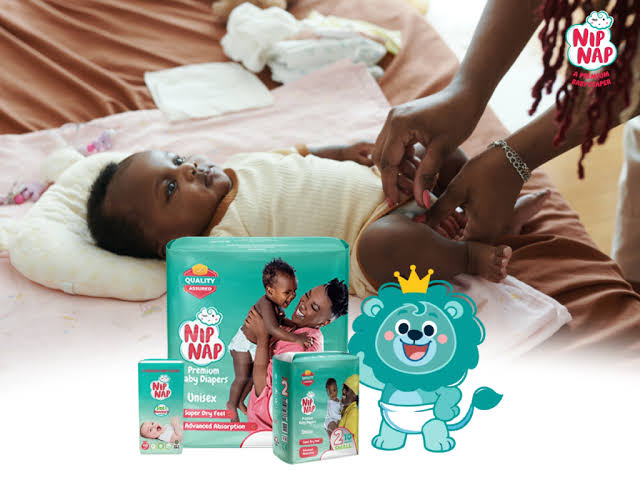
NipNap diapers are manufactured in Kenya, which is how local manufacturing keeps prices down compared to imported alternatives, without cutting corners on the materials or the certification the diaper carries. It’s worth knowing that the certification behind a diaper, not just the brand name on the front of the pack, is certification you can verify before you buy.
A Simple Monthly Budget Estimate
For planning purposes, a newborn can go through 8 to 12 diapers a day, dropping to roughly 6 to 8 a day by the time a baby reaches Size 3 or 4, and further down to 4 to 6 a day approaching potty training age.
Multiply your baby’s rough daily count by 30, then check that figure against the per-diaper price of your usual pack size. That gives you a monthly number you can actually plan around, rather than guessing and getting caught short mid-month.
Keep in mind this estimate moves with your baby. Growth spurts, illness, and switching sizes all change the daily count, so it’s worth rechecking every few weeks rather than setting a budget once and forgetting about it.
A Quick Honest Note on Prices
Prices in this guide reflect a general range at the time of writing, not a locked-in number. Diaper pricing in Kenya shifts with supply chains, exchange rates, and seasonal promotions, so the smartest move is to check current pricing at your preferred stockist before you commit to a bulk purchase. What stays consistent is the way to compare: per diaper, per dry hour, and against what your household actually needs, not just what’s cheapest on the shelf that day.
According to the Kenya National Bureau of Statistics, household budgeting for essential goods is one of the areas most affected by cost-of-living shifts, which is exactly why a clear-eyed price comparison, rather than a one-off cheap deal, is worth doing properly.