
A realistic, age-by-age breakdown so you can plan your diapers in Kenya budget instead of guessing at the till.
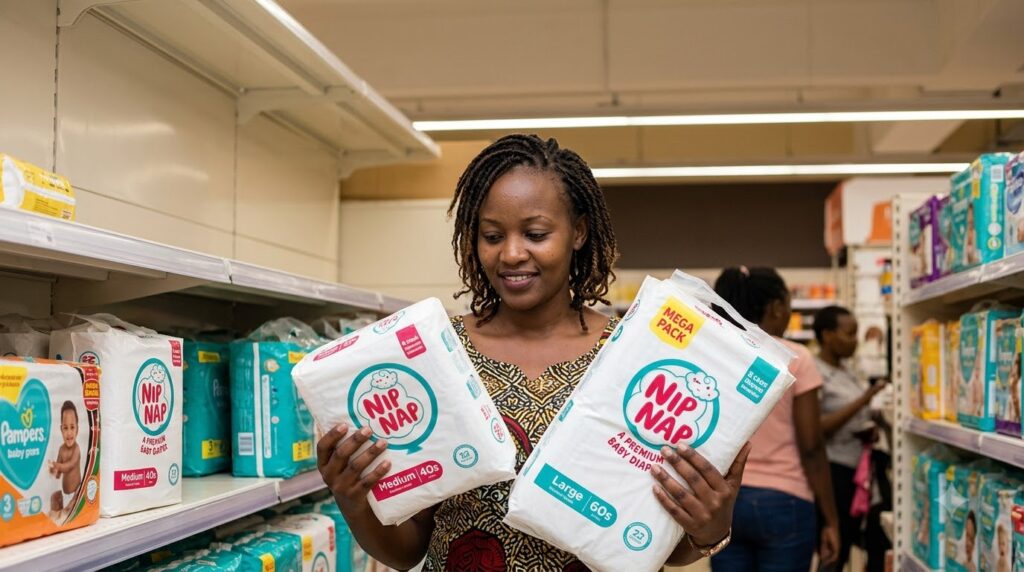
You're standing in the shop with two pack sizes in your hands, trying to do mental maths on how long either one will actually last. It's a fair question, and it's one most parents only really figure out by running out at an inconvenient time first.
Here's a straight answer, based on how diaper use actually changes as a baby grows, so you can plan your disposable diapers Kenya budget instead of guessing every time you're at the till.
Average Daily Changes by Age
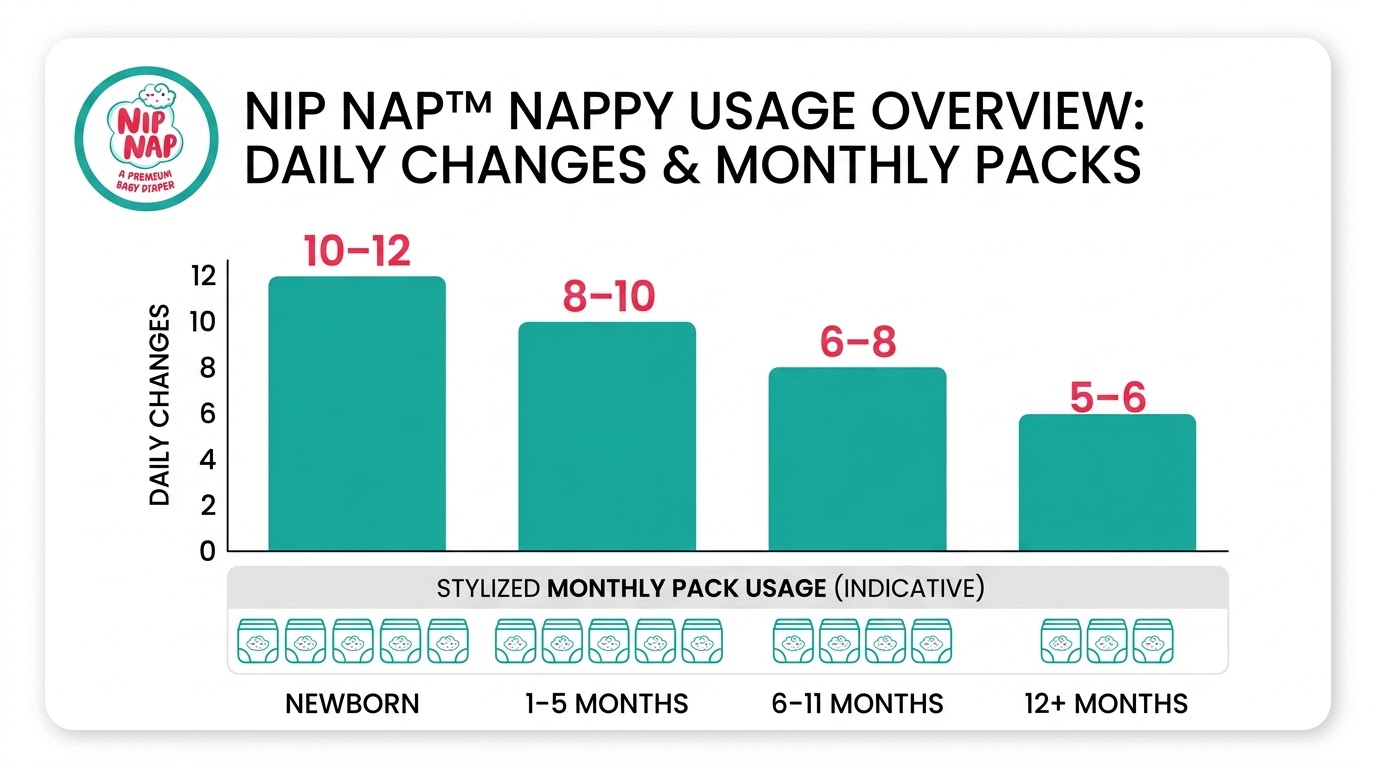
Newborns go through diapers at a rate that surprises most first-time parents. According to HealthyChildren.org, the American Academy of Pediatrics notes that parents typically change 8 to 12 diapers a day once they're into the routine, with most families averaging around six changes a day across the whole diaper-wearing period.
| Age | Changes Per Day | Diapers Per Month (approx.) |
|---|---|---|
| Newborn (0–1 month) | 10–12 | 300–360 |
| Infant (1–5 months) | 8–10 | 240–300 |
| Older baby (6–11 months) | 6–8 | 180–240 |
| Toddler (12+ months) | 5–6 | 150–180 |
These numbers aren't identical for every baby. Breastfed newborns in particular tend to need more changes in the early weeks, since they feed more often. Use this as a planning range, not a fixed rule.
What This Looks Like Over the First Year
Add it up and the total is bigger than most parents expect before they've done the sums. A baby who averages six changes a day across their first year works out to somewhere close to 2,000 diapers before their first birthday. That's not a scare number, it's just the reality of daily care, and it's exactly why buying in a way that matches your baby's actual stage, rather than whatever pack happens to be on the shelf, makes a real difference to your monthly spend.
Translating Daily Changes Into a Realistic Pack Count
If a standard pack of NipNap disposable diapers in Kenya holds, say, 30–50 pieces depending on size (smaller nappies pack more per bag; bigger sizes pack fewer since each piece is larger), here's roughly how that maps to a month for a newborn averaging 10 changes a day:
The exact pack size varies by retailer and size, so check the piece count on whatever pack you're buying rather than assuming it matches another size you've used before.
How Bulk Buying Changes the Maths
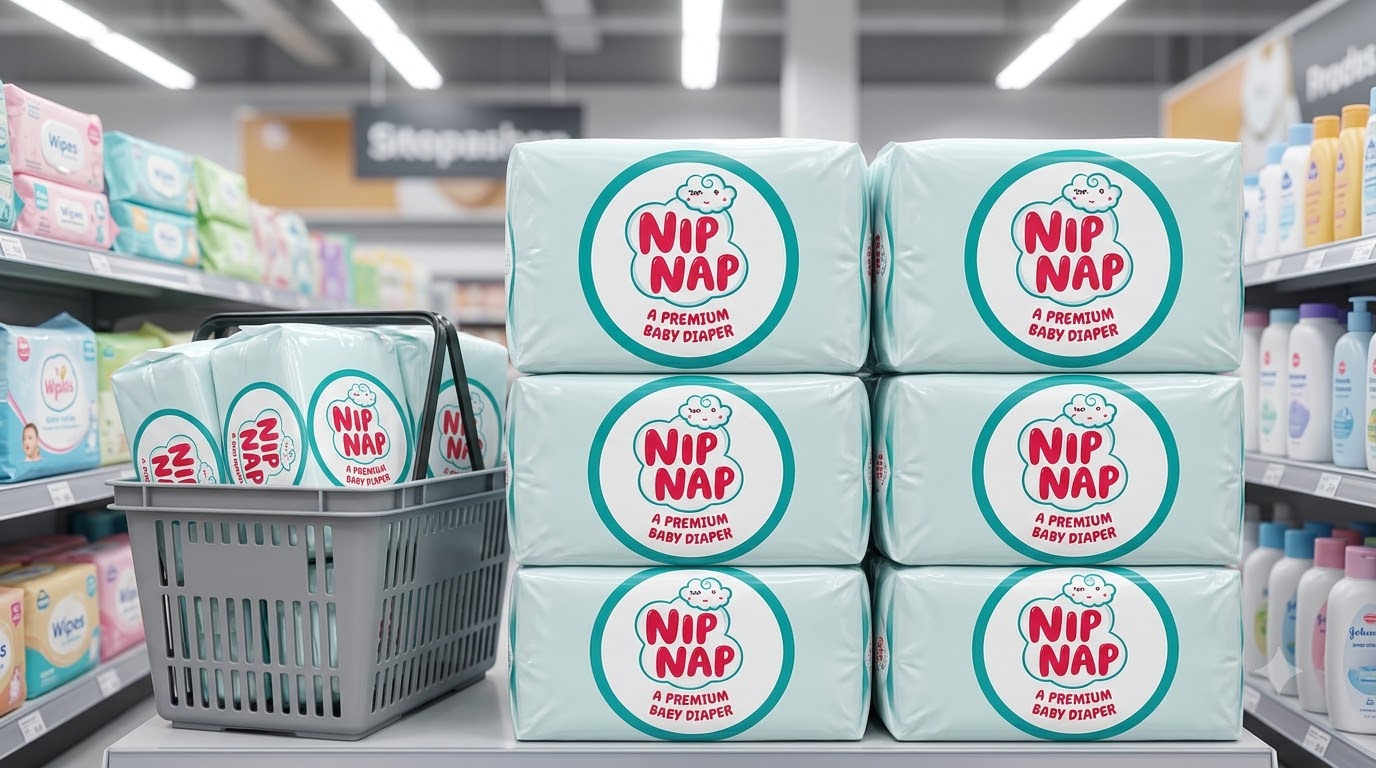
Buying single packs as you run out is the most expensive way to keep a baby in diapers. Retailers and the brand itself tend to price bulk cartons lower per piece than single packs, because there's less handling and packaging cost per diaper. If you know your baby is going to be in a size for the next six to eight weeks (which the sizing chart can help you estimate), buying a carton instead of restocking one pack at a time is usually the cheaper route over that window.
The trade-off is storage and upfront cost. Not every household has room, or spare cash, to buy two months of diapers at once, and that's a completely reasonable constraint. If bulk buying isn't realistic right now, the next best move is buying during promotions and stocking a couple of packs ahead, rather than always being one pack away from a supermarket run.
Single Packs vs. Bulk Cartons: Which Saves More
| Factor | Single Packs | Bulk Cartons |
|---|---|---|
| Cost per piece | Higher | Lower |
| Upfront spend | Small and spread out | Larger, paid once |
| Supermarket trips | More frequent | Fewer, less risk of running out |
| Storage needed | Minimal | A dry shelf or cupboard space |
| Best for | Tight week-to-week budgets, or sizing that's still changing | Stable sizing and predictable monthly spend |
If your baby's size has been steady for a few weeks and you have somewhere dry to store extra stock, a carton is almost always the better value over single packs.
Budgeting Tips: Ahead of Time vs. As-Needed
Buy Ahead During Promotions If...
- You have somewhere dry to store extra stock
- Your baby's weight has been stable for a few weeks
- You can afford the larger upfront cost even if it saves money over time
Buy As-Needed If...
- Your baby is in a growth spurt and sizing might change soon
- Cash flow is tighter week to week than month to month
- You're still working out which size and fit suits your baby
Most Kenyan families end up somewhere in between: a small buffer stock of the current size, topped up during offers, with single packs bought only when something changes unexpectedly.
Month-by-Month Estimate for the First Year
| Baby's Age | Est. Diapers/Month | Est. Packs/Month* |
|---|---|---|
| Month 1 | ~330 | 8 |
| Months 2–3 | ~270 | 6–7 |
| Months 4–6 | ~240 | 6 |
| Months 7–9 | ~210 | 5 |
| Months 10–12 | ~180 | 4–5 |
*Based on an average pack size; actual pack counts vary by size and retailer.
Where NipNap Fits In
NipNap disposable diapers in Kenya are made locally, which keeps supply steady and pricing predictable, even when the shilling is doing its own thing. Whether you're buying single packs while you figure out sizing or stocking up for the month, you'll find NipNap at Mydawa, Carrefour, and Greenspoon, or you can order directly through WhatsApp if you'd rather skip the supermarket queue. For the full rundown on materials and fit, our essential guide to disposable diapers in Kenya is a useful next read.
Never Run Out Mid-Month Again
Stock up on the disposable diapers Kenya parents trust, sized right and priced fair.
FAQ: Disposable Diapers Kenya Budgeting
How many diapers should I buy for a newborn's first month?
Plan for around 300–330 diapers, which is roughly 8 packs depending on pack size. It sounds like a lot, but newborns genuinely go through 10–12 changes a day in the first few weeks.
Does breastfeeding really change how many diapers I need?
Yes. Breastfed babies tend to have more frequent bowel movements in the early weeks than formula-fed babies, which usually means a few extra changes a day until things settle into a rhythm.
Is it cheaper to buy a bigger size and make it last longer?
No, and this is one of the more expensive habits parents fall into. A nappy sized too big won't seal properly, so you end up with leaks, wasted diapers, and extra washing, which costs more than just buying the correct size.
How do I avoid running out mid-month?
Track your baby's actual daily changes for a week and compare it to the table above. If your baby is on the higher end of a range, round your monthly estimate up rather than down.
Where can I find NipNap diapers in Kenya for bulk or monthly buying?
NipNap is available through Mydawa, Carrefour, and Greenspoon, and the team can advise on bulk pricing directly over WhatsApp.