

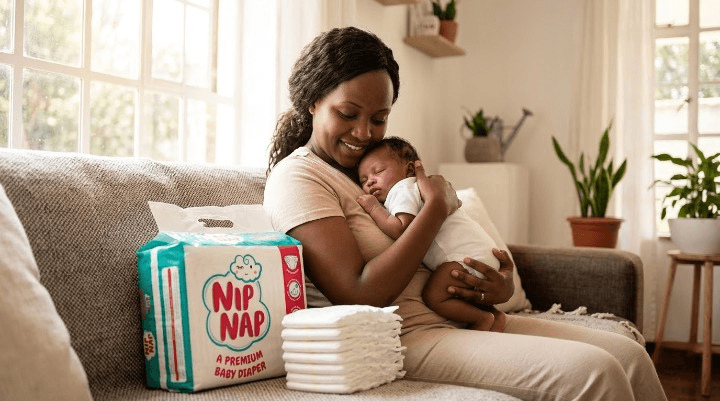
If you're stocking up before your due date, the first sum most parents try to do is this one: how many newborn nappies per day in Kenya should you actually plan for? The honest answer is somewhere between 8 and 12 a day in the first few weeks, and on some days a few more. That figure catches a lot of first-time parents off guard. It's also why the "just in case" newborn pack bought at the baby shower tends to be finished before your little one is two weeks old.
The good news is that the number drops as your baby grows, and a little planning stops you ending up with a cupboard full of the wrong size.
Why newborns get through so many nappies
A newborn's bladder is tiny and their tummy is even smaller. They feed little and often, usually every two to three hours, day and night. What goes in comes out quickly, so most feeds are followed by a wet nappy and, in the early weeks, often a dirty one too.
In the first few days you'll also see meconium, the thick, dark first stool. It's sticky and hard to clean, and you'll want to change it straight away rather than leave it sitting against brand-new skin. Once feeding settles, stools become softer and more frequent, especially for breastfed babies, who may poo after almost every feed for a while.
So a high number of changes isn't a sign that anything is wrong. It usually means your baby is feeding well.
A rough guide to nappy changes by age
Every baby is different, so treat these figures as a starting point rather than a target. Your own baby's feeding pattern will decide the real number.
| Baby's age | Approximate changes per day | What's going on |
|---|---|---|
| First week | 8 to 12 | Feeding is being established and meconium is passing |
| Weeks 2 to 4 | 10 to 12 | Frequent feeds and frequent, softer stools |
| 1 to 3 months | 8 to 10 | Bladder is growing, so each nappy holds a little more |
| 3 to 6 months | 6 to 8 | Longer gaps between feeds and fewer dirty nappies |
How many nappies to buy for the first month
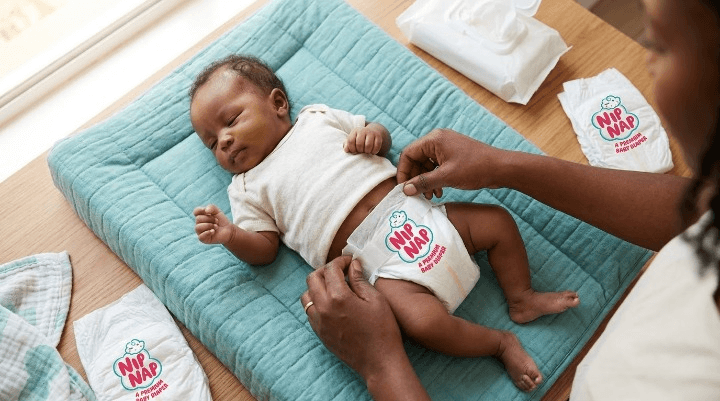
Take an average of around 10 changes a day and multiply by 30. That's roughly 300 nappies in the first month alone. It sounds like a lot, and it is, which is why it helps to plan rather than grab a pack every time you pass the supermarket.
A few things we'd suggest from talking with Kenyan parents:
- Don't overbuy Size 1. NipNap Size 1 Newborn fits babies up to 5 kg, and many babies are ready for Size 2 Mini (3 to 6 kg) sooner than you'd expect.
- Buy one or two packs of Size 2 before the birth if your baby is expected to be on the bigger side.
- Check the weight on the pack, not the age. Our baby diaper sizes page lists every size by weight.
- Keep an eye on your monthly spend. Our disposable diapers monthly guide breaks down what a typical month looks like.
Signs your baby needs a change sooner
Clocks and routines help, but your baby's nappy will tell you more than any schedule. Change it when you notice any of the following:
- The nappy feels heavy or has started to sag between the legs
- There's any poo at all, even a small amount
- The skin around the nappy area looks pink or red
- Your baby is unsettled after a feed and nothing else seems to be wrong
A wet-only nappy can sometimes wait a little, particularly in the middle of the night, but a dirty one should always be changed straight away. If you're unsure how long is too long, our honest guide on how long you can leave a wet nappy on covers it in detail.
What about night-time changes?
Newborns feed through the night, so night-time changes are part of the deal for the first few months. The goal is to change what needs changing without waking your baby fully.
A good absorbent nappy helps here. NipNap nappies use a 3D absorbent core that pulls moisture away from the skin and spreads it through the nappy, which is what lets a wet-only nappy stay comfortable between night feeds. Keep the lights low, have wipes and a clean nappy ready before you start, and try not to chat or play. If you're getting leaks at night, it's usually a fit problem, and our guide to overnight nappy leaks explains how to sort it.
Getting ready before the baby arrives
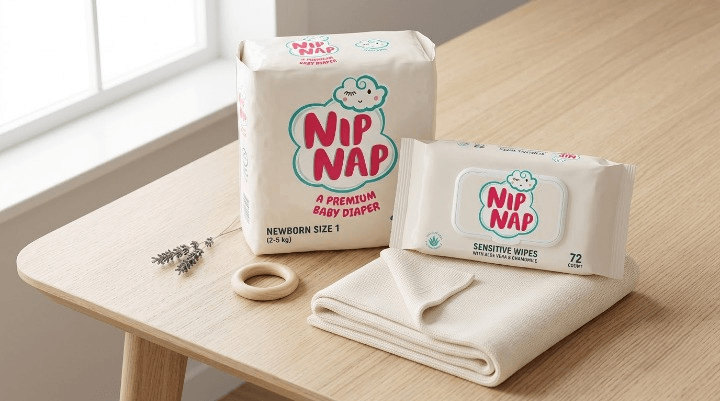
If you're still in the planning stage, pack at least one full pack of newborn nappies and a pack of wipes in your hospital bag. Babies can go through a surprising number of nappies in the first 48 hours, and hospital supplies are not always generous. Our hospital baby bag list and the full hospital checklist will help you get everything together in one go.
For wipes, pick something gentle. NipNap baby wipes are alcohol-free, paraben-free and dye-free, with chamomile and marigold extracts, which matters when you're wiping the same small area ten times a day.
Plan for more than you think you'll need
When it comes to newborn nappies per day in Kenya, the safest plan is to expect 10 to 12 changes a day in the early weeks and to size by weight, not age. Buy enough to get you through the first month, keep a pack of the next size up in reserve, and change dirty nappies straight away. Your baby's comfort, and your own sanity at 3am, will thank you for it.
Stock Up on Newborn Nappies Kenya Parents Trust
NipNap nappies are made in Kenya with a 3D absorbent core, soft breathable layers and up to 12 hours of dryness, from Size 1 Newborn upwards.